

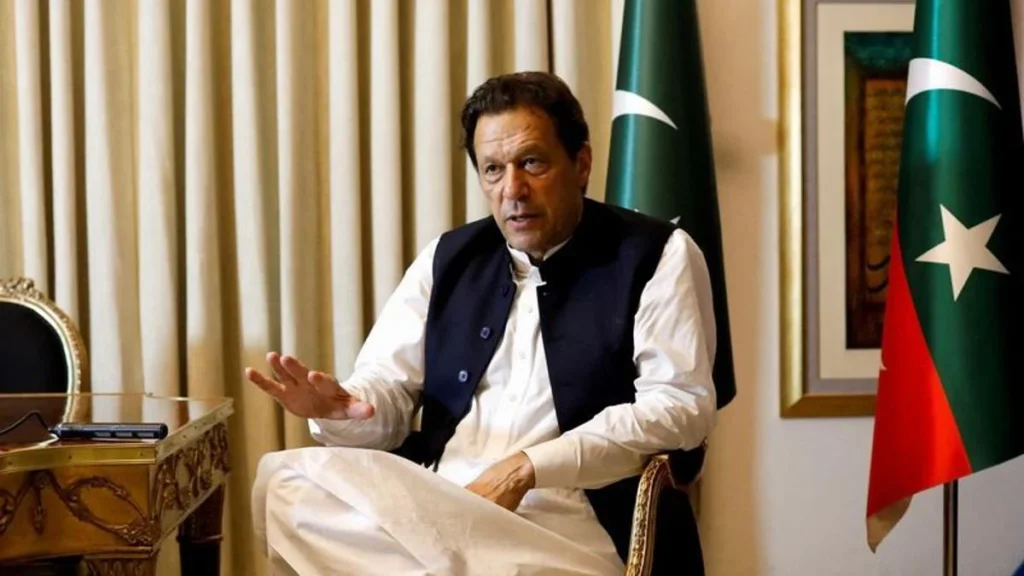
In a notable display of bipartisan unity, over 60 U.S. lawmakers have called on President Joe Biden to take action for the release and safety of former Pakistani Prime Minister Imran Khan. This initiative highlights rising concerns regarding Khan’s recent imprisonment and its potential impact on democracy in Pakistan.
The lawmakers, representing both political parties, sent a letter to the President, stressing the significance of a stable and democratic Pakistan. They expressed alarm over reports regarding Khan’s treatment in custody, underscoring the need for the U.S. to engage diplomatically to ensure his safety and fair treatment.
Khan, who was ousted from power in April 2022 and later arrested on corruption charges, has emerged as a symbol of resistance against what many view as authoritarian tendencies in Pakistan. His supporters contend that the legal actions against him are politically motivated, aimed at suppressing dissent and undermining democratic processes.
In their letter, the lawmakers voiced concerns that Khan’s imprisonment could escalate political tensions in Pakistan, potentially destabilizing the region. “As a nation that values democracy and human rights, we must stand firm against any actions that threaten these principles,” the letter read.
The lawmakers’ call to action comes amid rising violence and political unrest in Pakistan, raising fears that Khan’s continued detention could lead to further instability. They urged the Biden administration to use its influence to encourage the Pakistani government to uphold democratic norms and protect Khan’s rights.
Critics of the Pakistani government have welcomed the intervention from U.S. lawmakers, viewing it as a crucial step toward promoting accountability and human rights in the country. As diplomatic discussions progress, the international community is closely monitoring the situation, hopeful for a resolution that emphasizes justice and stability in Pakistan.
As President Biden considers his response, the situation remains dynamic, with many advocating for a proactive stance in support of democracy in Pakistan. The coming weeks may be critical, not only for Khan but for the broader political landscape in South Asia.
 Tech Prolite