

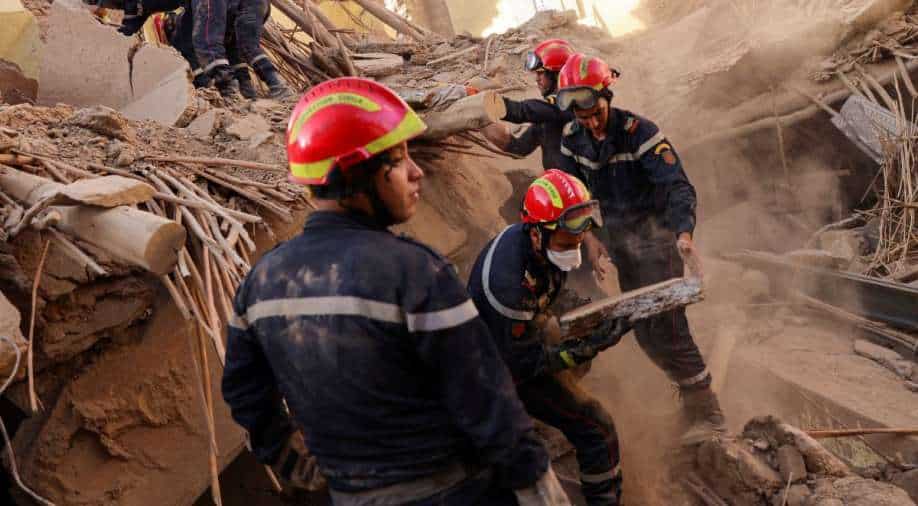
The death toll from the earthquake that struck Morocco on Friday has risen to over 2,800, according to Moroccan authorities. The earthquake, which had a magnitude of 6.8, struck the High Atlas mountain range, about 72 kilometers (44.7 miles) southwest of Marrakech.
The earthquake caused widespread damage in the region, with many buildings collapsed or severely damaged. Rescue workers are still searching for survivors, but the chances of finding anyone alive are diminishing.
The Moroccan government has declared three days of national mourning. The Prime Minister, Aziz Akhannouch, has visited the affected areas and pledged the government’s full support to the victims.
https://canvas.ubc.ca/eportfolios/48463/TR/Bitcoin_Gold_and_Energy_Consumption_Environmental_Implications
https://canvas.ubc.ca/eportfolios/48464/FH/Bitcoin_Gold_Mining_Explained_From_Setting_Up_To_Avoiding_Pitfalls_
https://canvas.ubc.ca/eportfolios/48467/HU/Bitcoin_Gold_Hard_Forks_Understanding_the_Upgrade_Process_
https://canvas.ubc.ca/eportfolios/48468/BH/Bitcoin_Gold_in_the_Future_Predictions_and_Developments
The earthquake has also caused a humanitarian crisis. Many people have been left homeless and without access to food, water, or medical care. The United Nations has appealed for international assistance to help the victims of the earthquake.
The earthquake is the strongest to hit Morocco in over a century. It is a reminder of the country’s vulnerability to natural disasters. Morocco is located in a seismically active region, and earthquakes are a regular occurrence.
The government has taken steps to mitigate the risk of earthquakes, but more needs to be done. The earthquake has highlighted the need for better building codes and more investment in disaster preparedness.
The Moroccan people are resilient, and they will overcome this tragedy. But the earthquake will have a lasting impact on the country, and it will take time for the region to recover.
 Tech Prolite